 Escape Climate
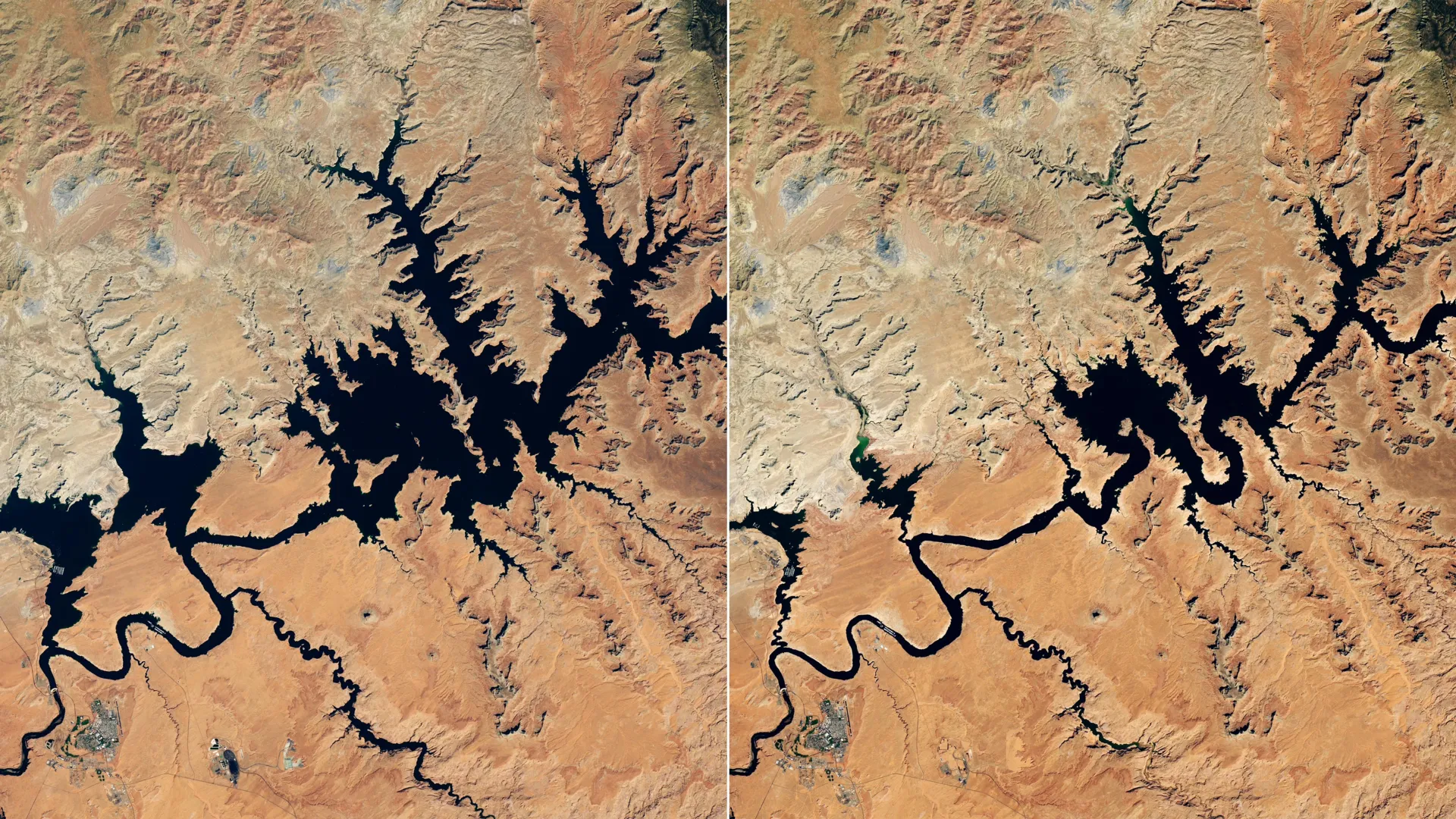
Lake Powell Hits Record Low Amid Drought
Lake Powell has hit its lowest level on record due to a dry winter.
The Colorado River Basin saw little mountain snow, leading to reduced meltwater and contributing to the reservoir's decline. Lake Mead also reached unprecedented lows, affecting water supplies for over 40 million people. Federal officials are taking emergency measures like transferring water from other sources to stabilize the situation.
Both Lake Powell and Lake Mead have hit record lows due to a lack of snowmelt, impacting millions who rely on these reservoirs.
The prolonged drought conditions could lead to further depletion of water resources in the region, exacerbating existing water stress issues. The ecological degradation from low water levels can harm aquatic life and disrupt ecosystems.
What is the long-term climate outlook for this region?
The long-term forecast suggests continued warming trends and reduced snowpack in the Colorado River Basin, likely leading to more frequent drought conditions. This will increase water stress and could necessitate stricter water management policies. The current emergency measures are temporary fixes that may not address the underlying climate challenges.
Long-term outlook is grim with increased risk of persistent drought.