 Escape Climate
Hidden Magma Sources Uncovered Beneath Nicaragua's Masaya Volcano
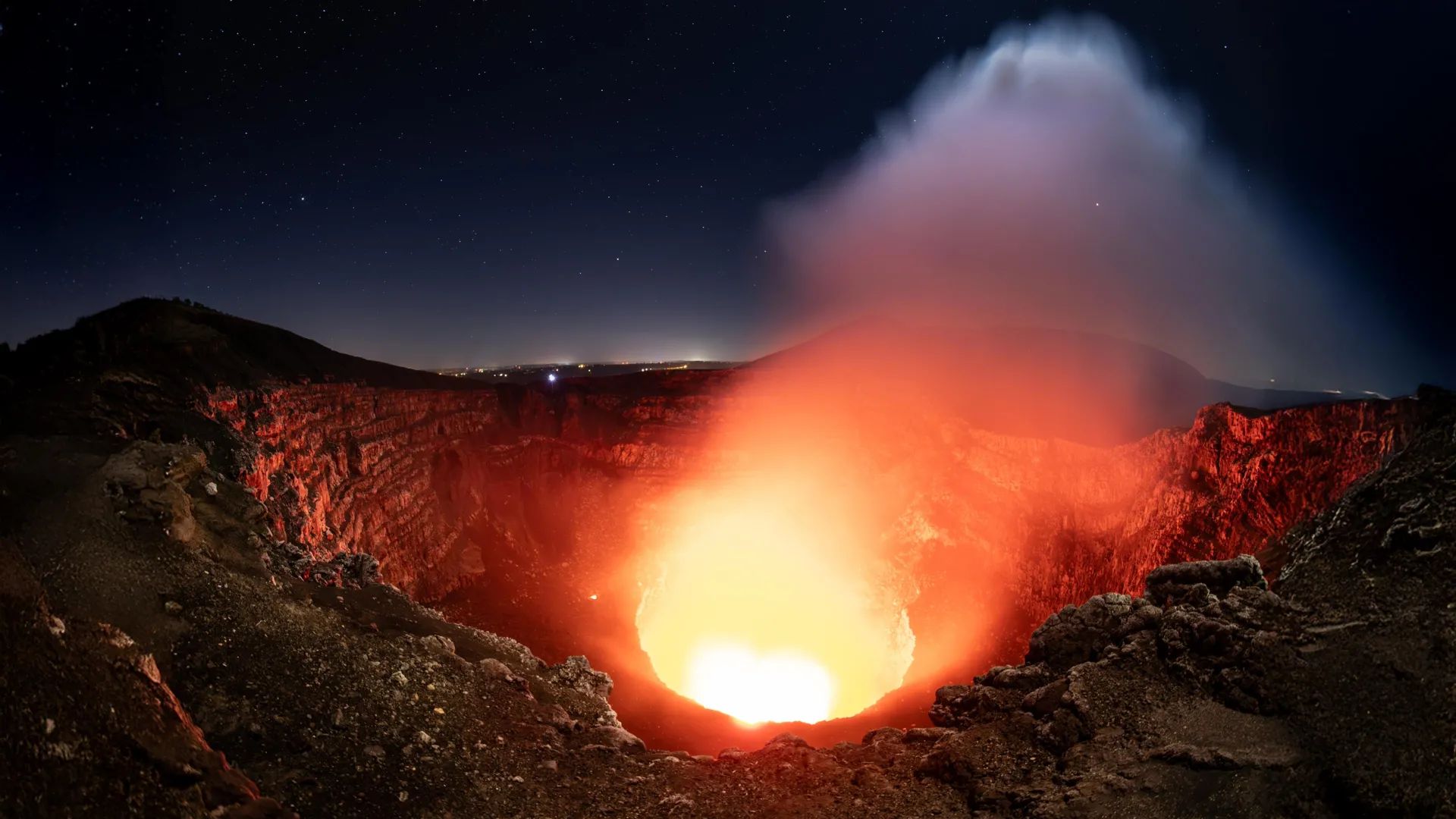
Scientists have found two hidden magma sources beneath the Masaya volcano in Nicaragua, near a population of 2 million.
Satellite observations show mysterious ground movements indicating shifting magma deep underground. This discovery could enhance eruption forecasting for an active site that also draws tourists to its lava lake.
The findings suggest there are more magma reservoirs than previously thought, which can help predict when the volcano might erupt.
Long-term vulnerability includes potential increased frequency and unpredictability of eruptions, posing risks to nearby residents and visitors.
What is the long-term climate outlook for this region?
The discovery of additional magma sources beneath Masaya volcano could lead to more frequent eruptions. This poses significant risks to local infrastructure and tourism. Improved forecasting can help mitigate these dangers.
Outlook remains cautious due to increased eruption potential.